


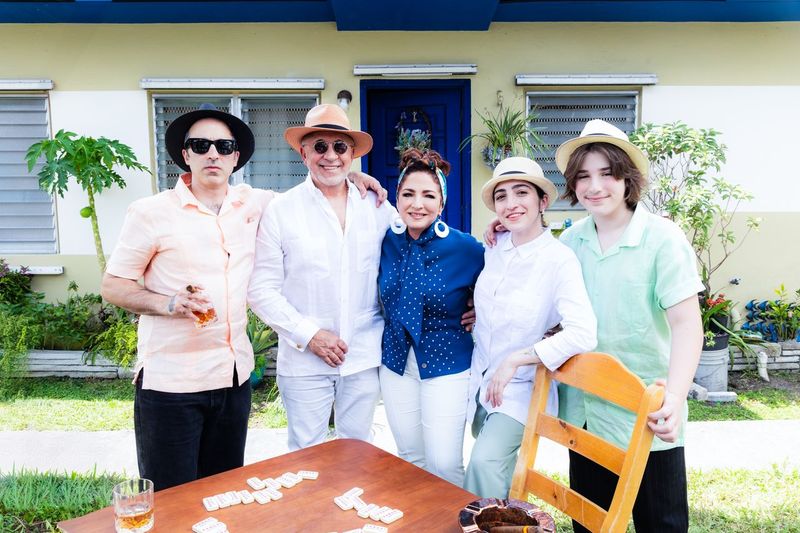
By: Nancy Esteves
Photos: Jesus Corderos
For more than four decades, Emilio Estefan has defined Latin crossover in music, television, film, theater and business. His official site credits him with more than 30 Grammy nominations and 19 wins. His recent highlights include Gloria Estefan’s 2025 album Raíces , 2025 Leagues Cup and FIFA Club World Cup remixes, “Hialeah” for the city’s centennial, a 2025 Latinos in Sports Pioneer Award, and Miami-Dade’s proclamation of Emilio Estefan Day in 2025. In this conversation, he reflects on the work, values and legacy that still drive him.
Q: Nancy Esteves: What keeps you so active?
Emilio Estefan: The World Cup, America250, Broadway and new records have kept me extremely busy. This year is also the Statue of Liberty’s anniversary; as a trustee for over 20 years, I am helping organize it. I just spent three days at Days to Shine, the women’s convention I work on in the Dominican Republic, with 20,000 women. Thank God, it is good to be busy. I will work as long as I can and as long as my mind allows, because I enjoy it.
Q: Tell us about the America250 soundtrack.
America250 marks the United States’ 250th birthday. I was chosen to unite artists and produce the soundtrack, including Kool & the Gang, Tony Bennett and Billy Joel. Gloria and I wrote “America,” its only new song. The collection traces music that traveled from the United States worldwide. Recordings from different eras and technologies require equalizing for consistent sound and volume, plus artist relationships to secure permission. Queen Latifah’s Los Angeles concert looking back at this history was a great success.
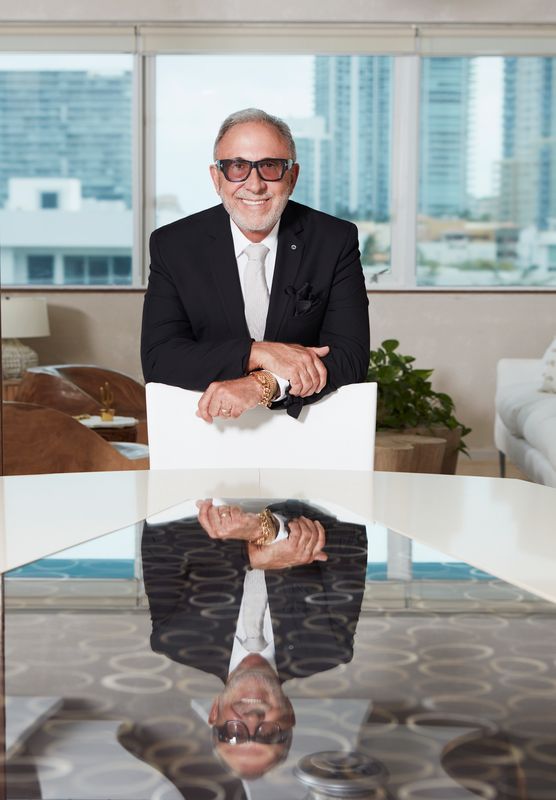
Q: What about your sports and new music projects?
I worked on the World Cup and its soundtrack, made “Love Always Wins,” and opened the Miami show before the Argentina–Cabo Verde match, in addition to traveling as part of the production. Two years ago, I created music for the Leagues Cup and MLS. Ronkalunga’s new album is succeeding, while Cimafunk’s coming album, half English and half Spanish, is already generating buzz in Korea, Japan, England, France and Germany.
Q: You say music saved your life. What does it mean to you?
Music saved my life and childhood. Separated from my family like many Cubans, I found work I loved in music and saved enough to bring my mother from Cuba. I thank the press, DJs and fans who embraced me and the artists I worked with: Gloria, Shakira, Jennifer Lopez, Ricky Martin, Marc Anthony, Carlos Vives, Jon Secada, Thalía and Alejandro Fernández. Celia Cruz used to say: getting played on the radio matters, but people buying the record matters more — and people telling you in the street that they love you matters most of all. That kind of affection cannot be bought; it is earned through respect.
Q: What legacy do you want to leave?
That Latinos can achieve dreams and our countries are stronger united. The World Cup’s packed stadiums showed Latino economic power. I was also a Miami Dolphins minority owner. These examples show my children and young people that success is possible through hard work, thanking God each morning and remaining grateful to those who support you.
Q: What lesson from The Rhythm of Success should the next generation keep?
People said my Latino sound would fail, as they once said women did not sell records. Yet I produced Celia Cruz, Gloria, Shakira, Thalía and Jennifer Lopez. Never let anyone change your life. Say, “If it succeeds, it is my success. If it fails, it is my failure.” Believe. Sony refused me entry seven times; five years later, I was president of artist development at Sony Music.
Q: How did that shape your support for Cachao?
Fame does not define my life. What matters is leaving a legacy that gives the community pride and teaches young people about those who opened doors when it was difficult. When I signed legendary bassist Israel ‘Cachao’ as Crescent Moon’s first artist, people asked whether he sang or was young and handsome. I said he did not sing and was handsome, but not young. Andy García and I made his album and won the Grammy, preserving who we are and showing what we can do.
Q: What should young bilingual U.S. Latinos know about identity and perseverance?
My grandson calls my English accent strong; I say his grandmother finds it sexy. We sacrificed to record and promote songs, taking them to DJs, then reached number one in England, France and Germany. José Feliciano, Carlos Santana and Julio Iglesias fought without changing names or abandoning our language. Now Bad Bunny and Shakira succeed. I never wanted to fail the community. When one of us succeeds, an entire community succeeds. We are 70 million U.S. Latinos, with a foundation, television networks and radio. Never be afraid; good-faith effort can achieve anything.
Q: Why is the National Museum of the American Latino important?
President Obama appointed me in 2009. I said a museum must show Latino contributions. Parties and opinions changed; many left, thinking it impossible. I stayed, one of the first appointees and one of the only original members still involved, because I always believed it would happen. Winning approval for the museum in Washington was a great career achievement. This is not only about Cubans, Puerto Ricans, Mexicans or Colombians, but a Hispanic community contributing worldwide. Latinos should feel proud, grateful to the country welcoming us, and respected for our contributions.



 Contact Us