


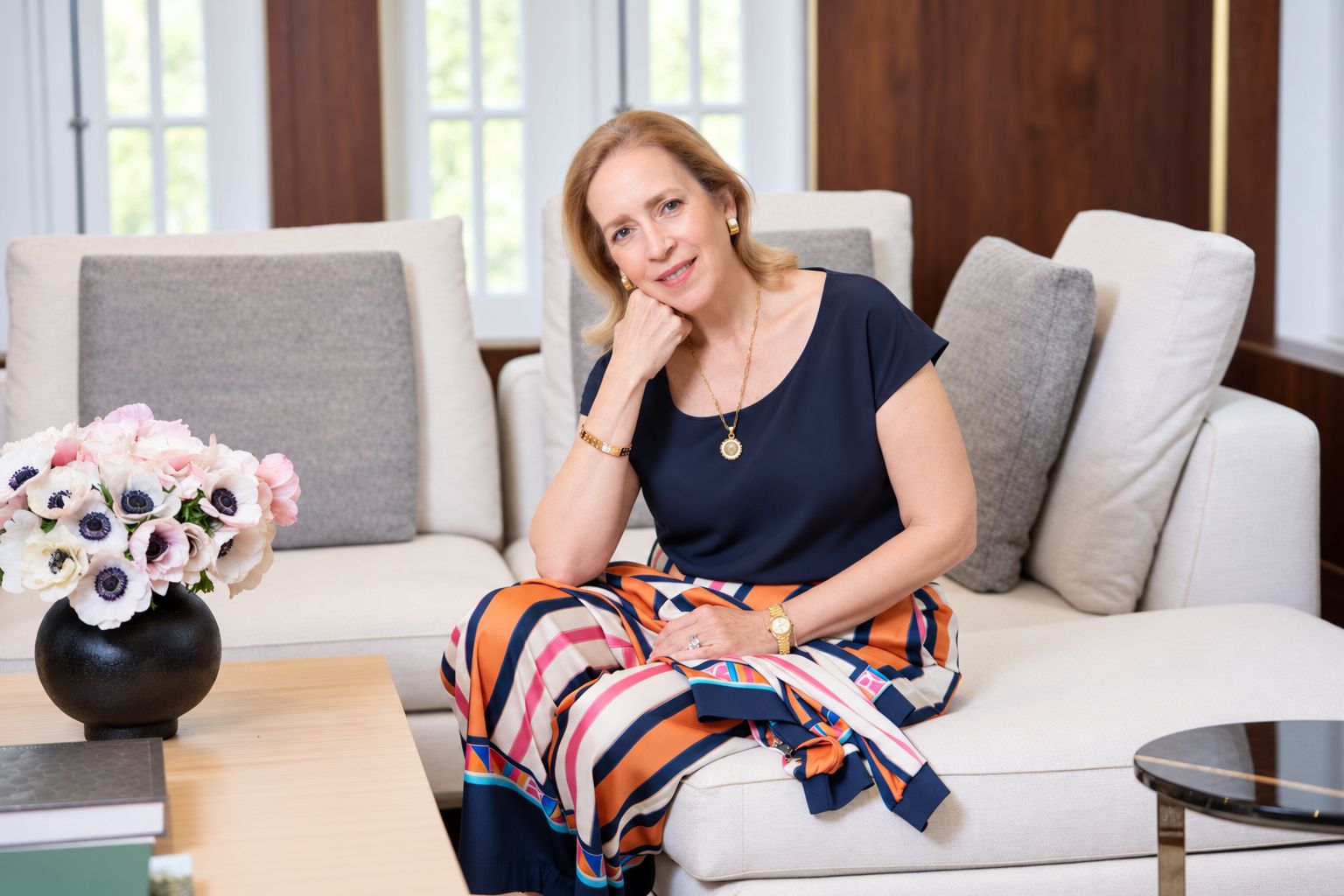
A Cuban exile, a real estate dynasty, and the visionary who carries it forward.
The meeting had already been raided by the time her father arrived. The sirens were closing in. He walked out the back door of his house in Havana and never saw it again. His wife – a woman who could have fled to Peru, to the comfort of her family – had instead stayed behind and quietly secured his political asylum at the Mexican embassy. He left Cuba in the ambassador’s car, on the ambassador’s plane. His next stop was Miami. He never looked back.
That couple – a man of extraordinary courage and a woman of unshakeable devotion – would go on to build something no one could have predicted: a real estate dynasty that would help shape the skyline of one of the world’s great cities.
That dynasty belongs to Alicia Cervera Lamadrid.
In its October/November 2026 issue, Hola Latinos Magazine names Alicia Cervera Lamadrid its Icon of Hispanic Heritage Month – a distinction that, if you know her story, feels less like an award and more like something long overdue. Alicia is a source of inspiration for many who cross her path.
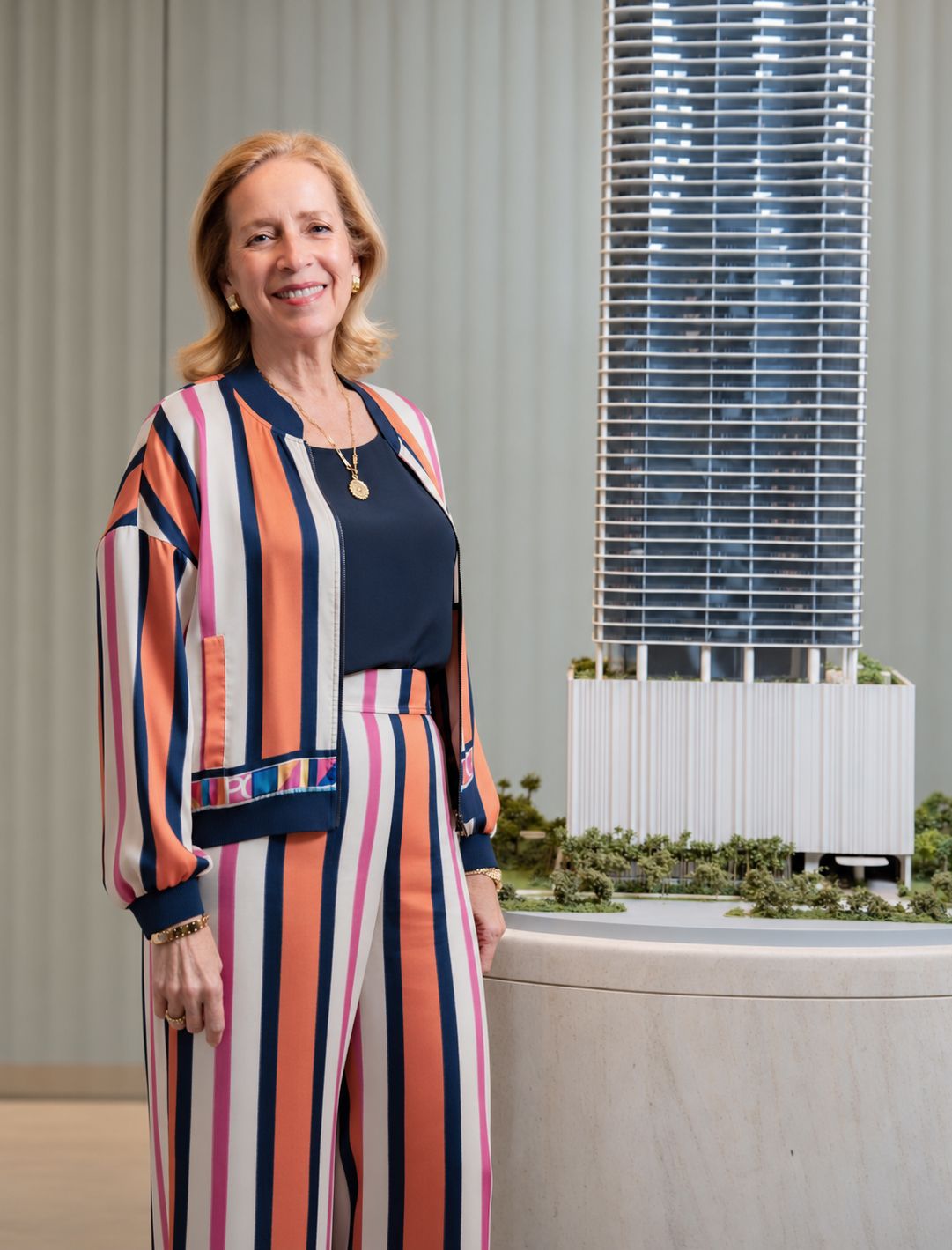
Ask her what she most wants to celebrate this month, and the answer arrives with characteristic warmth and precision. “Gosh, that’s a hard one, because all of it,” she says.
“I’m super proud of my Hispanic culture. I want to celebrate certainly the Cuban part of my heritage: the bravery of my father for having collaborated with the CIA during the Cuban Revolution; the tenacity and love of my mother to have followed him to Miami and gone through such a challenging exile situation – when she could have run home and lived very comfortably with her family in Peru, but chose to stand by my father’s side. I’m very proud of all of that,” she continues, with the weight of someone who has carried that story her whole life.
A University of Miami graduate who initially pursued a path in psychology, she ultimately found her calling in the family business. Her mother, Alicia Cervera Sr., had founded Cervera Real Estate more than five decades ago as Miami’s first brokerage dedicated to developer sales – giving Latin American buyers a trusted voice and opening doors for Hispanic families to invest in Miami at a time when representation was rare. Alicia joined that firm in the early 1980s, learned every corner of the business from the ground up, and made it her life’s work.
“I never planned on building the career I have today,” she reflects. “But life had a different plan for me. Real estate is about helping people find their dream home… I needed to be part of that happy place.”
What followed was one of the most remarkable careers in South Florida real estate. As President of Related Cervera Realty Services, she led the sale of more than 14,600 residences valued at over $6.8 billion in just a decade. She returned to Cervera Real Estate as Managing Partner in 2011, helping double the company’s size, and today oversees more than $4.5 billion in pre-construction and general real estate sales. Under the Cervera banner, the firm has represented more than 115 luxury high-rise condominiums throughout South Florida, totaling over $16 billion in sales – a legacy written across the skylines of Brickell, South of Fifth, Edgewater, Downtown Miami, and Coconut Grove.
But the woman behind those numbers is not defined by them. She is defined by what comes next.
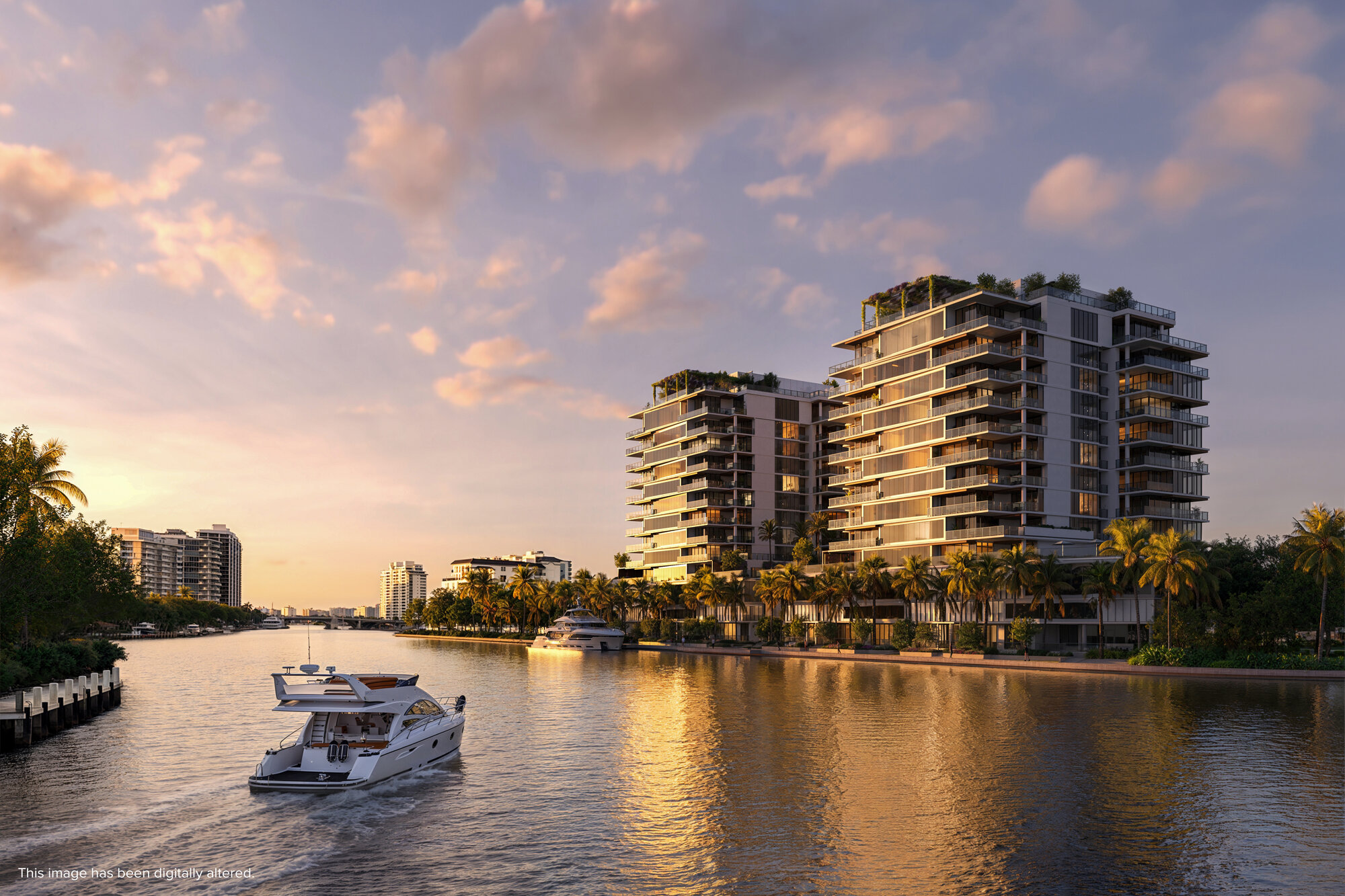
Today, her portfolio reads like a map of Miami’s most exciting new chapters. In Brickell, she is representing Domus – two buildings, Domus Brickell Park and Domus Brickell Center. In Coral Gables, there is Cassia, a short-term-rental-friendly project delivering by year’s end, and the new Seventeen Gables. In Wynwood, she is selling The Rider and the retail space at Mohawk. In Bay Harbor Islands, Origin Residences by Artefacto – the beloved Brazilian furniture brand’s first branded residential building in the United States, a waterfront boutique tower already under construction. At the very top of the market there is 1428 Brickell, setting a new bar for finishes in the city. And anchoring the portfolio is the crown jewel of the moment: the Mandarin Oriental Residences in West Palm Beach, a pre-construction project on the Intracoastal Waterway that she describes with unmistakable pride. “The newest and latest, and certainly very grand in our portfolio,” she says.
Ask her what today’s luxury buyer is looking for, and she doesn’t talk about marble countertops. She talks about longevity. “We’ve gone from a pool,” she says. “Then a pool and a gym. Then a spa. Now it has been elevated to longevity.” Red-light therapy. Hyperbaric chambers. Concierge wellness programming designed not just for fitness, but for extending the quality and length of human life. At 1428 Brickell, the developer dry-lays every stone floor before it ships – ensuring each slab comes from the same section of the same mountain, the same quarry, the same color. “It’s not about throwing gold on it,” she says. “It’s about a level of sophistication that is quite something.”
When American buyers began flooding Miami post-COVID, some analysts read it as a retreat of the Latin American market. She knew otherwise. “The number of Latin American buyers didn’t decrease,” she says with the calm of someone who had already done the math. “It’s just that the number of American buyers increased.” The reason, she argues, is strategic: Miami has become the gateway for U.S. companies looking to expand into Latin America. “They’re using Miami as the springboard. It’s convenient, and it gives them access to each other.”
She remembers when Coconut Grove had three clubs and there was, quite literally, nowhere else to go on a Friday night. She was there for the Mutiny, for Faces, for Food Among the Flowers. She watched – and helped build – the skyline that today defines one of the world’s great cities.
“I always say that I was lucky enough to grow up in a city that grew up with me,” she says, and the pride is unmistakable. “Street by street, neighborhood by neighborhood. We built this city. We welcomed people from all around the world with open arms, never feeling threatened. Because of that, we’ve been able to do this in record time.”
That “we” is the city – and the family that helped raise it.
She has done it in a world where most developers were – and still are – men. “I believe in showing up and doing the work, regardless of gender,” she says. “Being the only woman in the room can be advantageous because it brings a different strength and perspective that often levels the playing field. It starts with feeling empowered with who you are and knowing that within that power lies the opportunity.”
It is a philosophy that has earned her recognition well beyond the industry: in 2021, City of Miami Mayor Francis Suarez honored her as a “Woman of the City.” She has also been honored with the South Florida Business Journal Power Leader in Real Estate distinction six times, its Ultimate CEO Award, and the Master Brokers Forum Legacy Award.
When asked to define success, she is thoughtful: “Success is about balance. Money is important – there’s no denying that. I work for a living. But now, when I show up to work, I’m showing up for the people who work with me and rely on me. It isn’t just about business. It’s about being a good daughter, wife, mother, grandmother, friend, and citizen. And it’s also about taking care of yourself – because if you don’t refill your vessel, you can’t pour into others.”
She credits nature as her recharge. “I’m very disciplined – it’s hard to give myself time. But I’ve learned that balance includes self-care.”
For the next generation of Hispanic women who want to follow her path, she offers two pieces of advice – both quietly radical. “Don’t be afraid,” she says. “Fear is a great alarm, but you must stop, think, and evaluate. When you’re afraid, you’re often on the brink of doing something great.” And this: “Don’t think of yourself as anything other than talent. Not as Hispanics, not as women. As a great source of talent. Because talent is the hardest thing to find. If you can present yourself as that, the rest of it complements you. But don’t lead with it.”
Coming from a woman who has spent four decades being the only Latina in rooms full of male developers, this is not a rejection of identity. It is a strategy forged in the fire of having done it first.
At the close of our conversation, she mentions her family: two children, three grandchildren, a husband, and two sons-in-law. “I feel very blessed,” she says, “because I’m in the middle of that sandwich – between my mother, my kids, and my grandkids. It’s always worth remembering. It’s a blessing.”
Her mother – Alicia Cervera Sr., 96 years old, still the firm’s Chairman and still a daily force – is the living proof that the Cervera women do not stop. “My mom has always been a force,” Alicia says – and in that simple sentence lives a lifetime of admiration.
She recalls a moment that has never left her. “I hope that when people think of me, they smile. I remember sailing into the bay years ago, looking at the skyline. On my left was Brickell Avenue, with buildings my mother helped sell, and on my right was South of Fifth – every building facing the city was part of what we built. That was a moment of incredible pride.”
For Alicia Cervera Lamadrid, Miami was never just a market. It was always a mission. A mission that began in a Havana back door, in an ambassador’s car, in the courage of two people who chose to stay together when the world was falling apart.
Beyond billions in sales and over 115 luxury towers, the Cerveras’ greatest legacy may be empowerment – proof that vision, family, and perseverance can change a city forever.
She came from revolution. She helped build Miami. And she is not done yet.
By: Nancy Esteves | Location: The Residences at 1428 Brickell, Miami | Photos: Kenet Regis

 Contact Us