


Día de los Muertos is a celebration of presence. Across Mexico, families and communities honor loved ones who have died with flowers, food, candles, music and objects that keep their memory close. UNESCO recognizes the Indigenous festivity dedicated to the dead as Intangible Cultural Heritage of Humanity, a tradition rooted in the meeting of pre-Hispanic and Catholic beliefs.
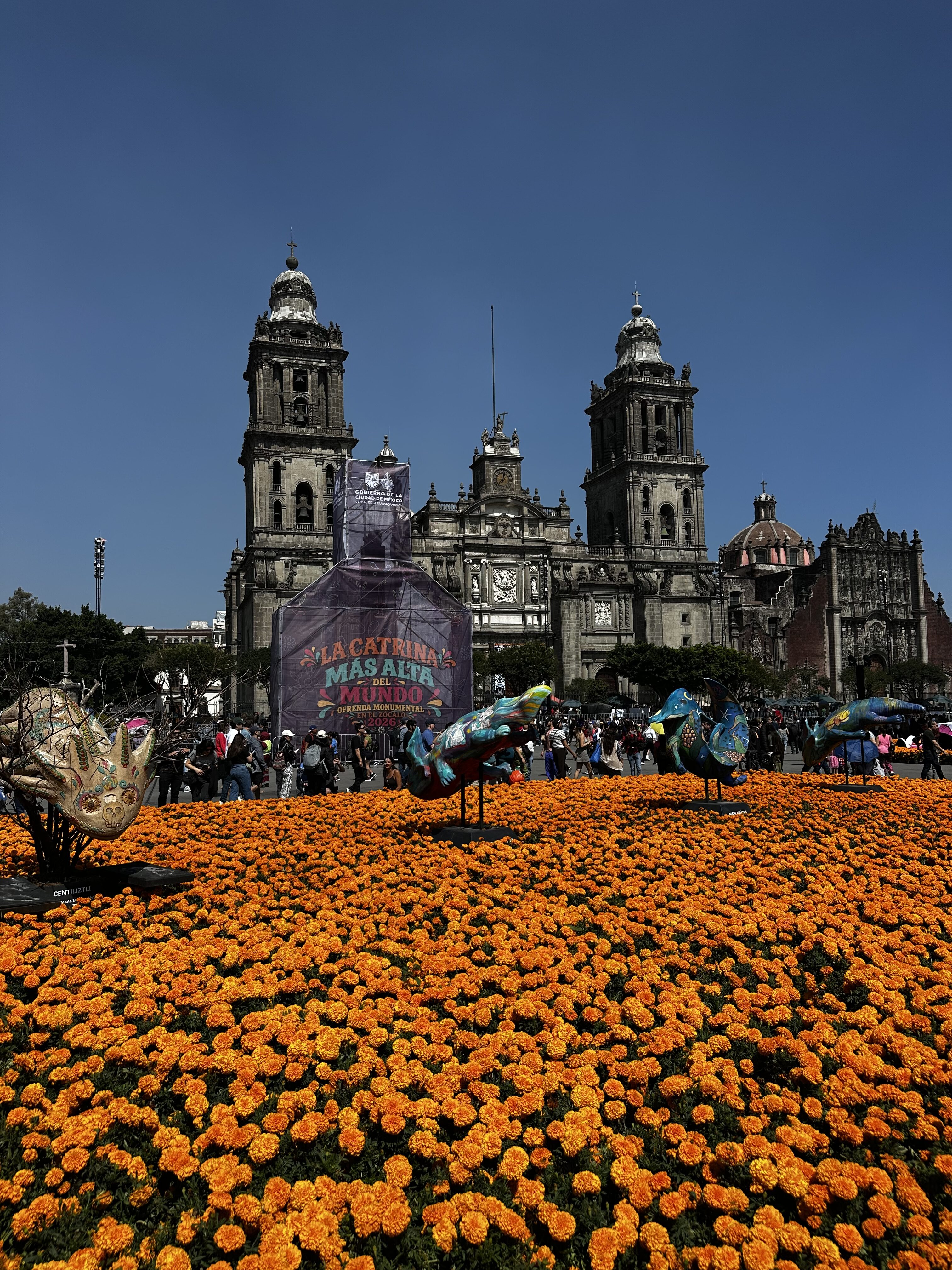
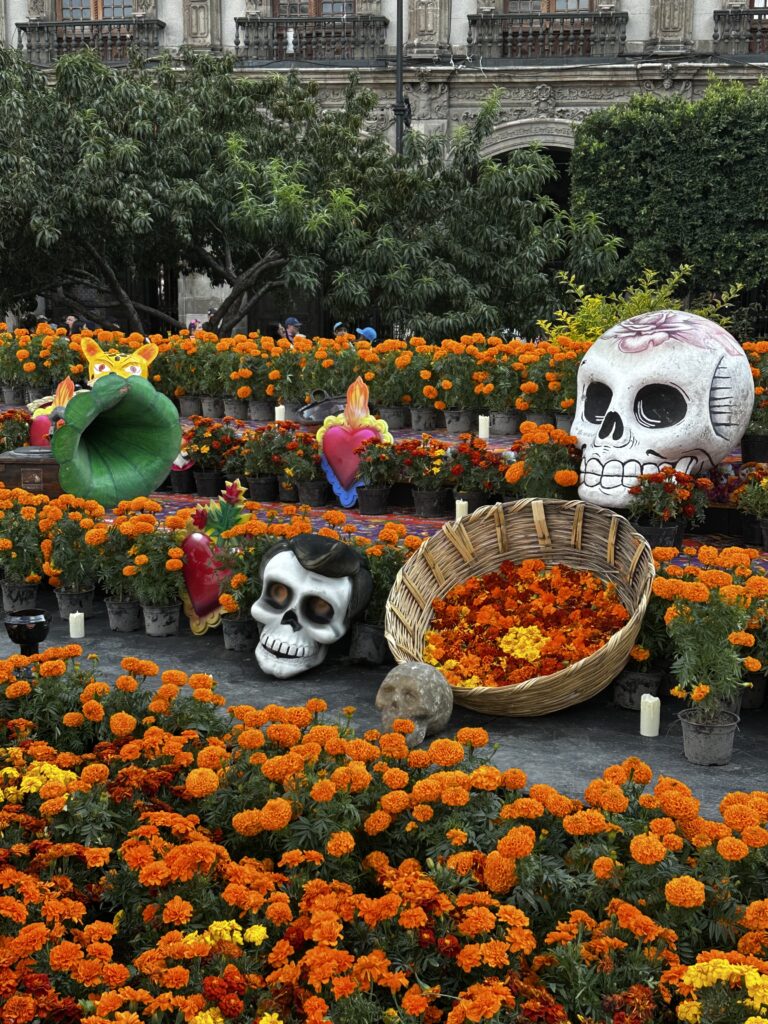
In Mexico City on October 31, the celebration unfolded at monumental scale. Photographs shared with Hola Latinos by Ileana Diaz show marigolds spreading across a public square, their orange field broken by sculptural skulls and fantastical figures. Nearby, crowds gathered beneath the Mexican flag as costumed performers and towering figures moved through the city.
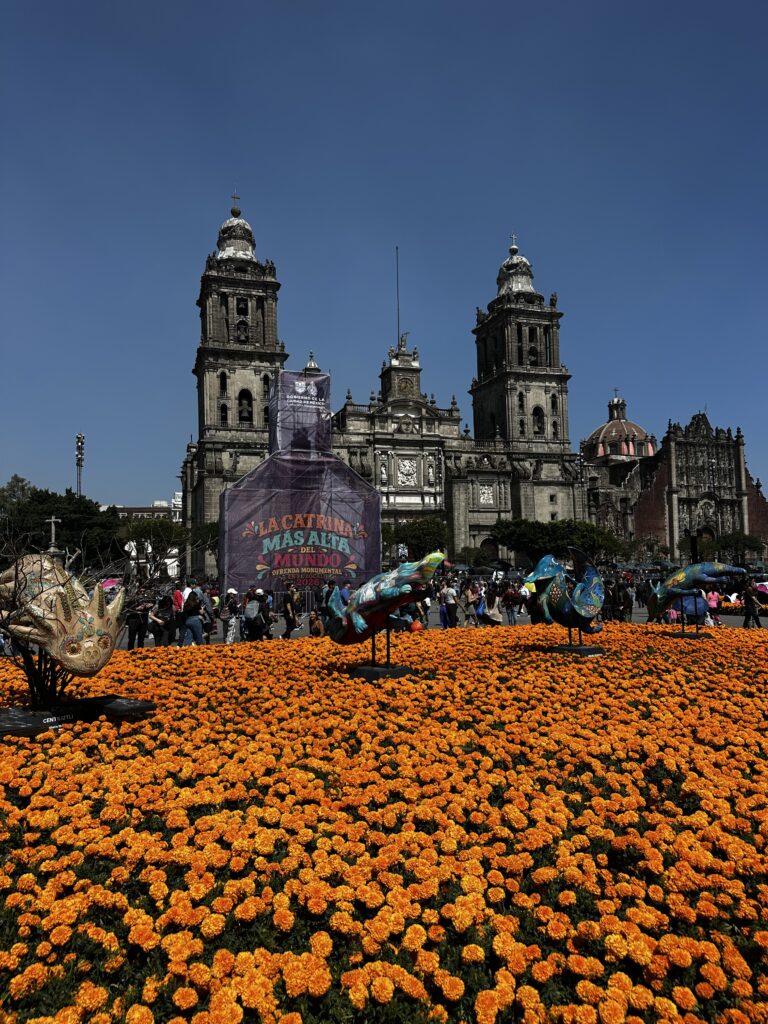
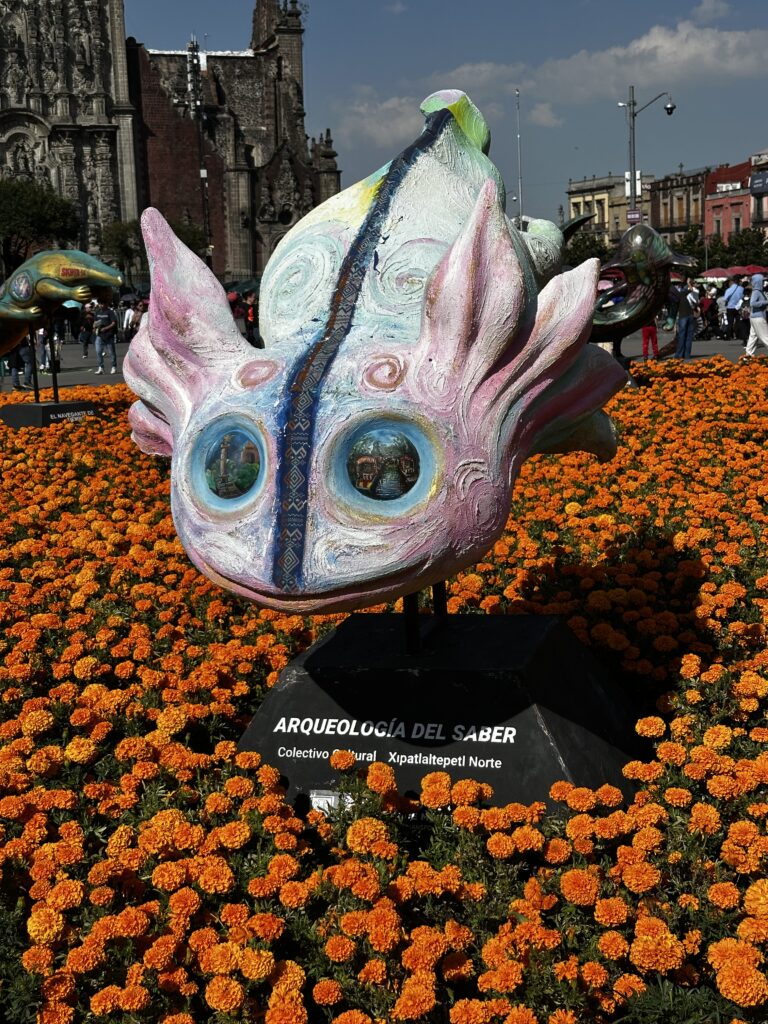
The flowers carry meaning. Cempasúchil, the marigold associated with the holiday, is traditionally used to help guide the spirits of loved ones back to the world of the living. In Diaz’s photographs, the blooms do more than decorate the scene. They set its emotional register: vivid, generous and alive.
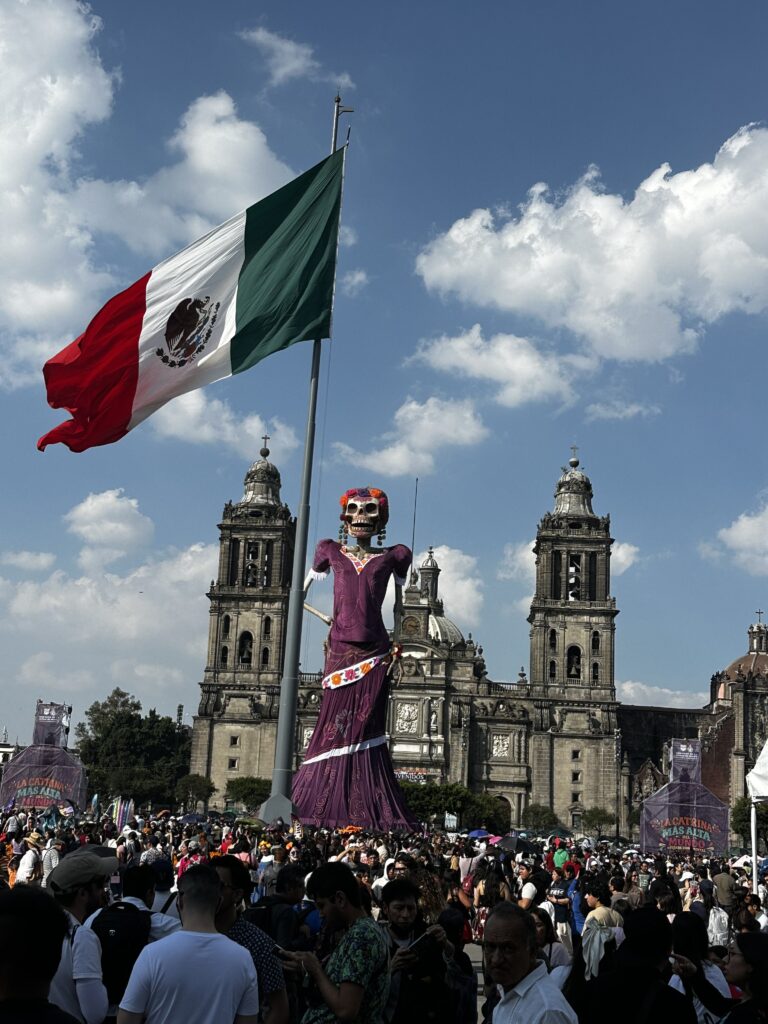
The city’s public art moves between remembrance and theater. A painted skull rests among petals. Monumental skeletons and musicians rise above the barricades. A procession of floats and performers turns the streets into a moving altar of color, while visitors lift their phones to catch each figure passing by.
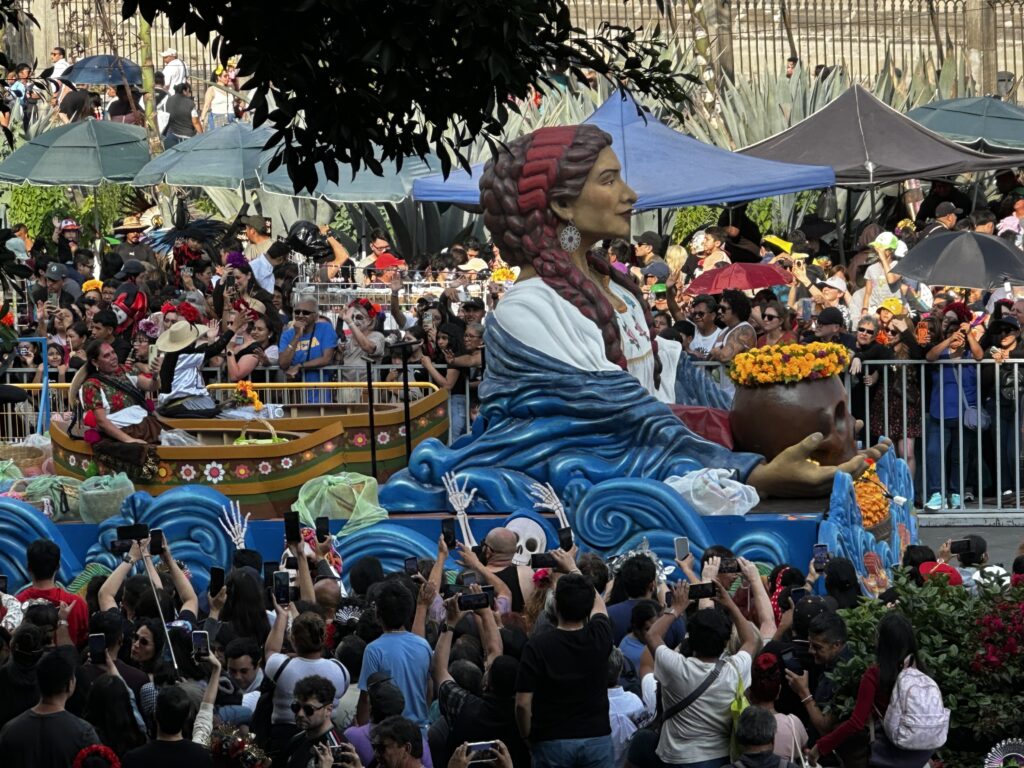
One image shows a stage sign for Gran Desfile Día de Muertos 2026. Others focus on performers in ornate hats, embroidered dresses and skull-inspired face paint. Their expressions are festive rather than mournful, reflecting a holiday that treats death not as an ending but as part of a continuing relationship between the living and the dead.
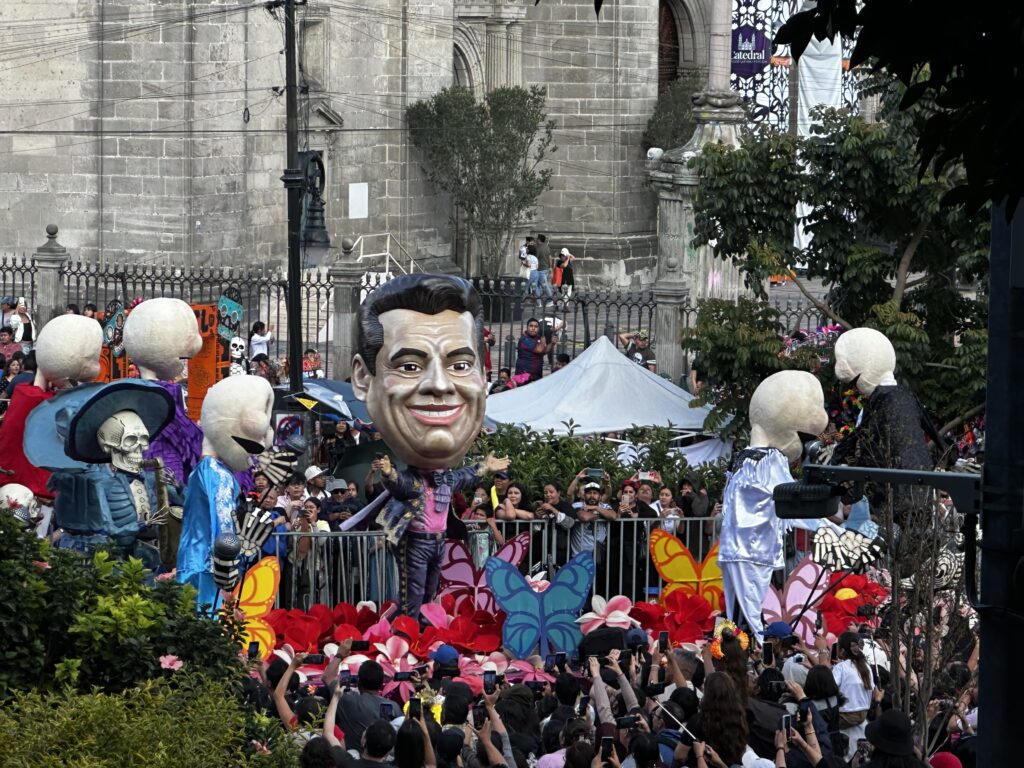
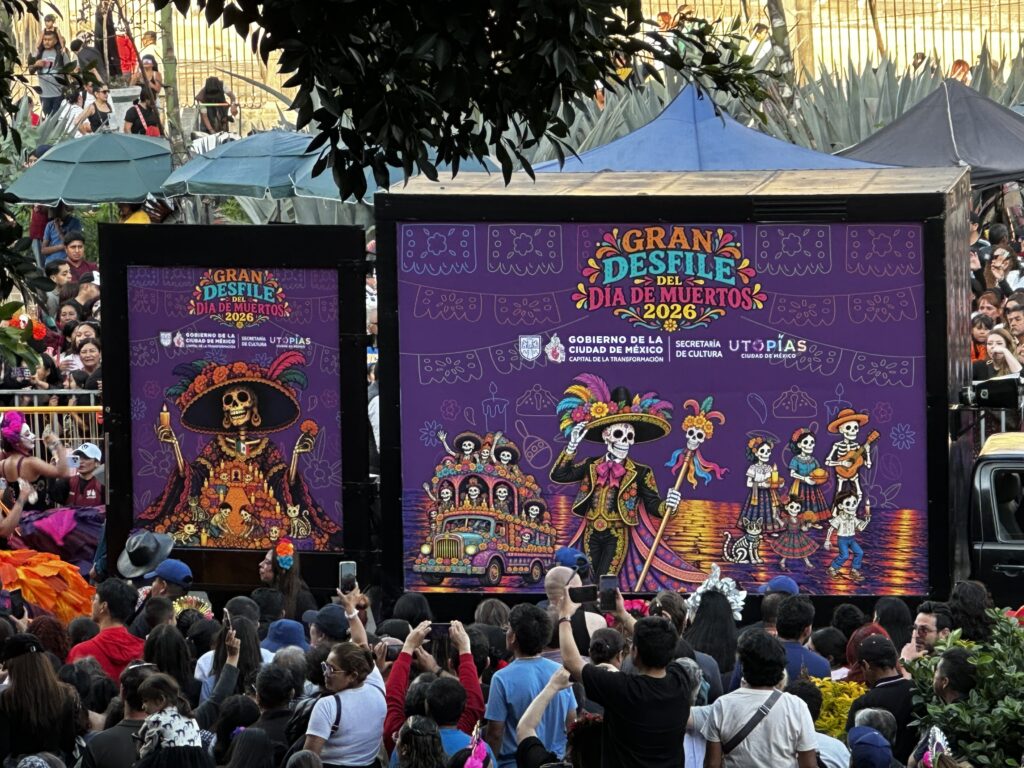
That balance is at the heart of Día de los Muertos. The celebration makes room for grief, but also for humor, beauty and reunion. In Mexico City, those private acts of memory become a shared civic spectacle, open to families, artists, performers and visitors.
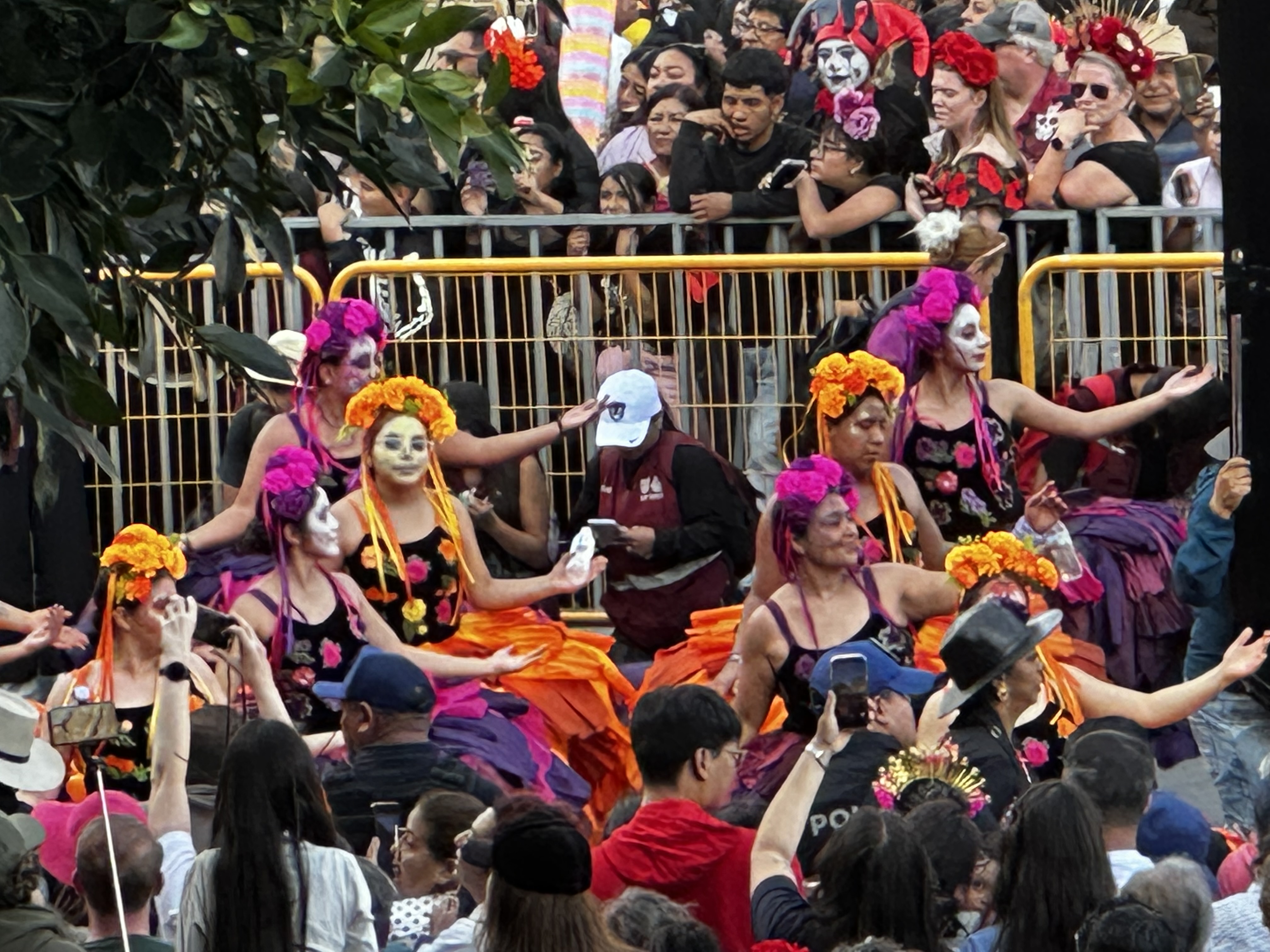
Diaz’s photographs preserve the day as a sequence of encounters: first the flowers, then the crowds, then the performers and larger-than-life figures. Together, they offer a window into a tradition that continues to evolve without losing its central purpose: to remember, to honor and to bring the dead back into the life of the community.
Photographs shared with Hola Latinos by Ileana Diaz / @ileanad65

 Contact Us