


By: Nancy Esteves · @nancyesteves.editor
Between Volcanoes and Sacred Waters
From the colonial courtyards of Antigua to the shores of Lake Atitlán, a luxury journey through a country where the Maya world endures.
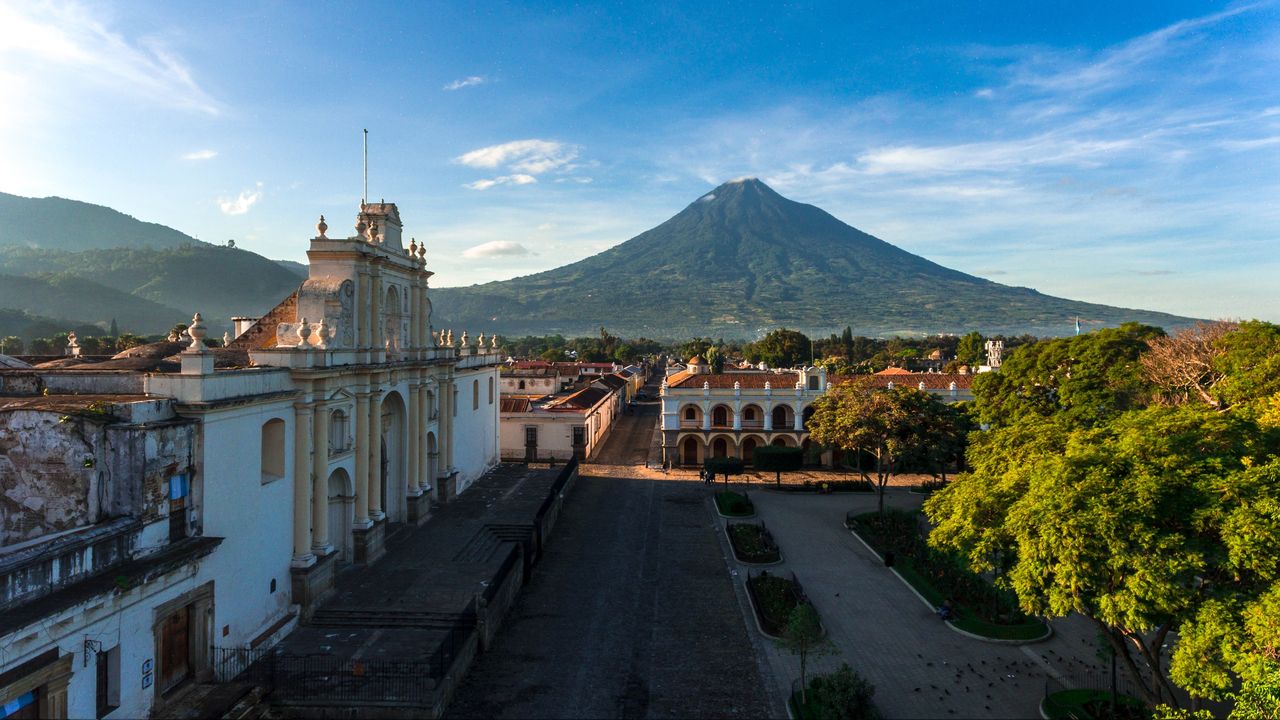
Antigua announces itself before you see it. You climb from the coast through coffee country, the valley opens all at once, and there it is: a perfect grid of cobbled streets, ochre and indigo facades, broken domes, and three volcanoes standing guard. Agua, Fuego, Acatenango. The middle one exhales smoke now and then; in case anyone forgets who is in charge here.
Founded in 1543 as Santiago de los Caballeros de Guatemala, it governed for 230 years a Captaincy General reaching from Chiapas to Costa Rica, until the Santa Marta earthquakes of 1773 forced the capital to move. What stayed behind — la antigua — became a city stopped in time. A World Heritage Site since 1979, its ruins share the grid with galleries, coffee roasters, and hotels that compete in discretion.
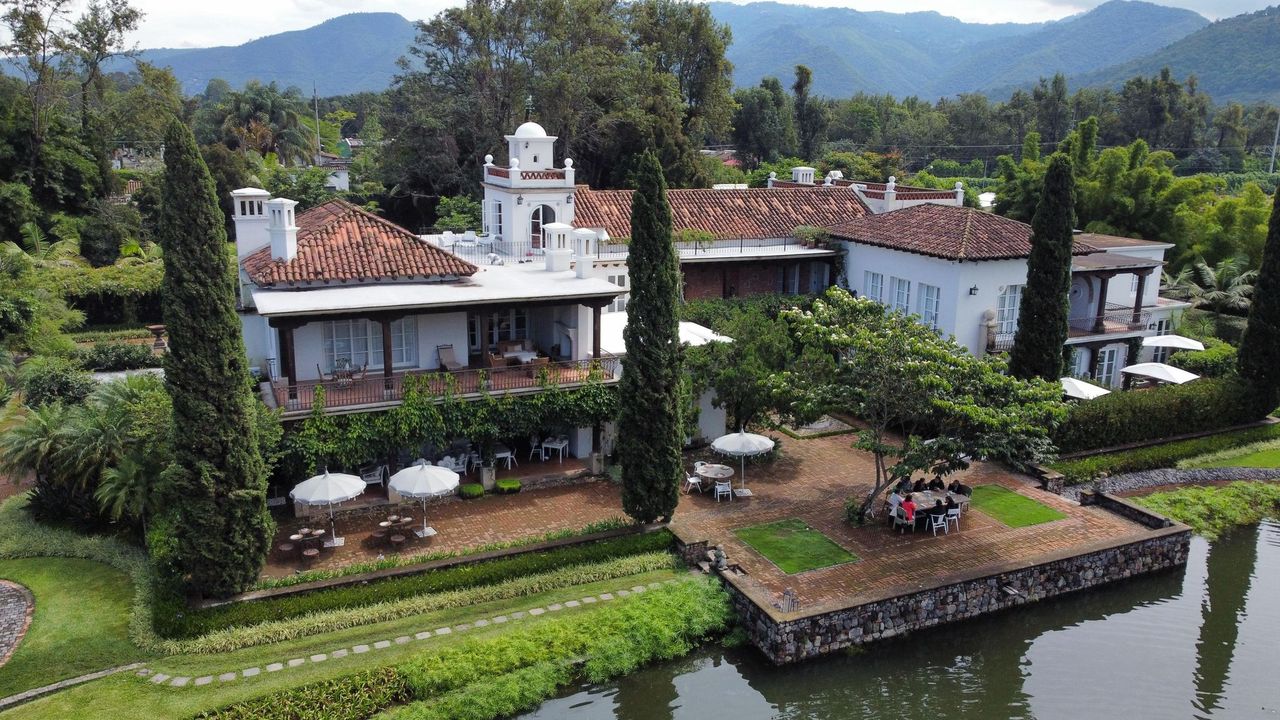
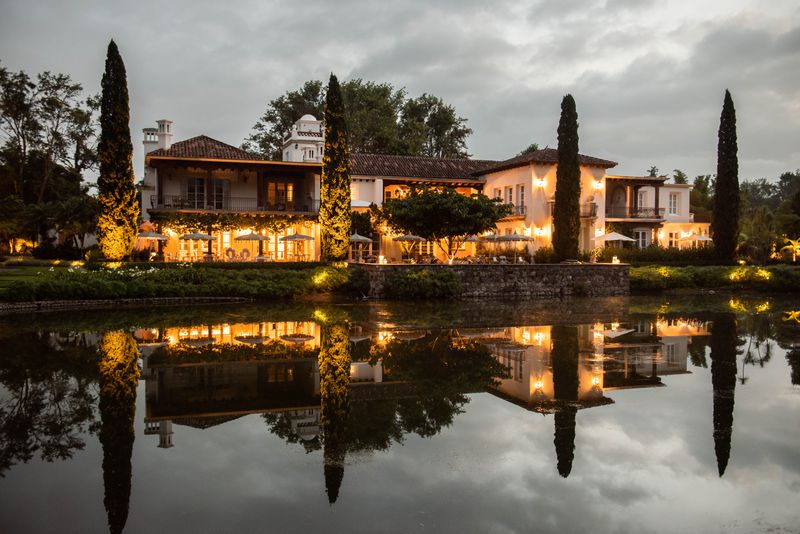
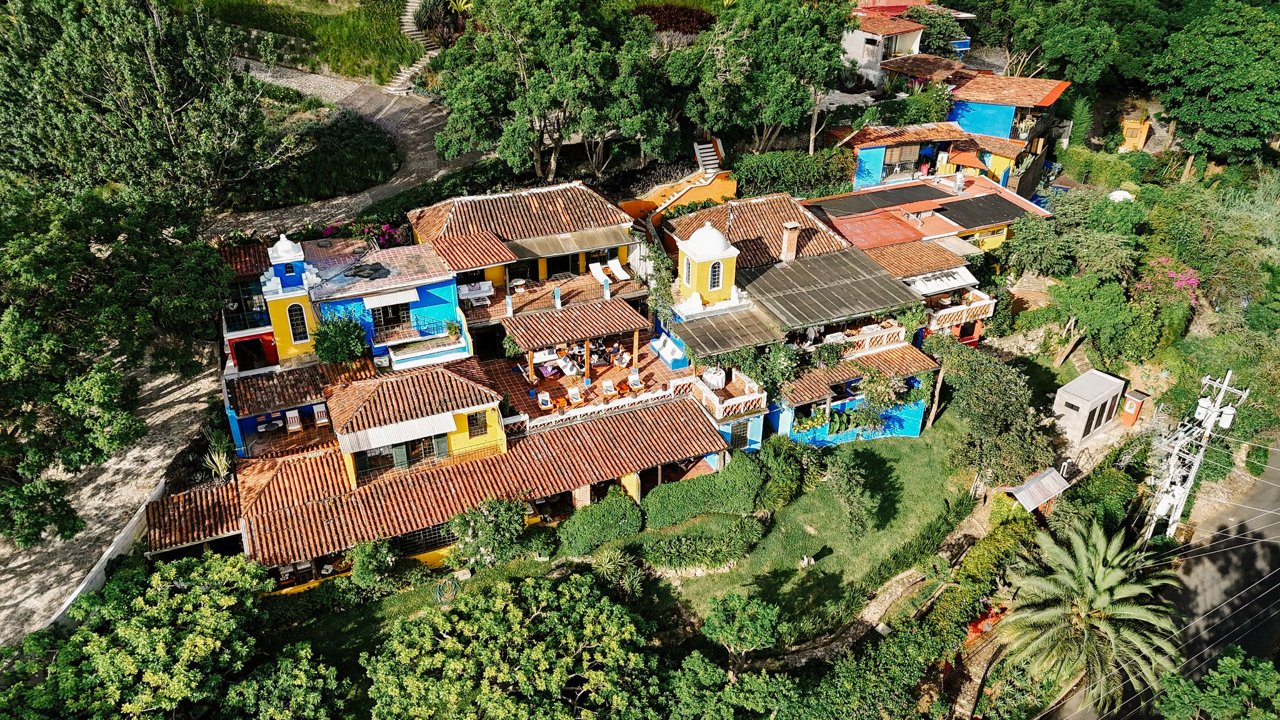
One of them, Villa Bokéh, has gathered in a few years the credentials others chase for decades: two Michelin Keys since October 2025 — the first in Guatemala, alongside Casa Palopó — and, since April, the first Guatemalan hotel admitted to The Leading Hotels of the World.
Fifteen suites sit hidden in six acres of gardens and ponds, many framing Volcán de Agua from the bed. That no two are alike has an explanation: textile expert Violeta Gutiérrez Caxaj curated the furnishings working only with Guatemalan artists and artisans. There are no televisions, and the service runs ahead of you: nobody here asks twice how you take your coffee.
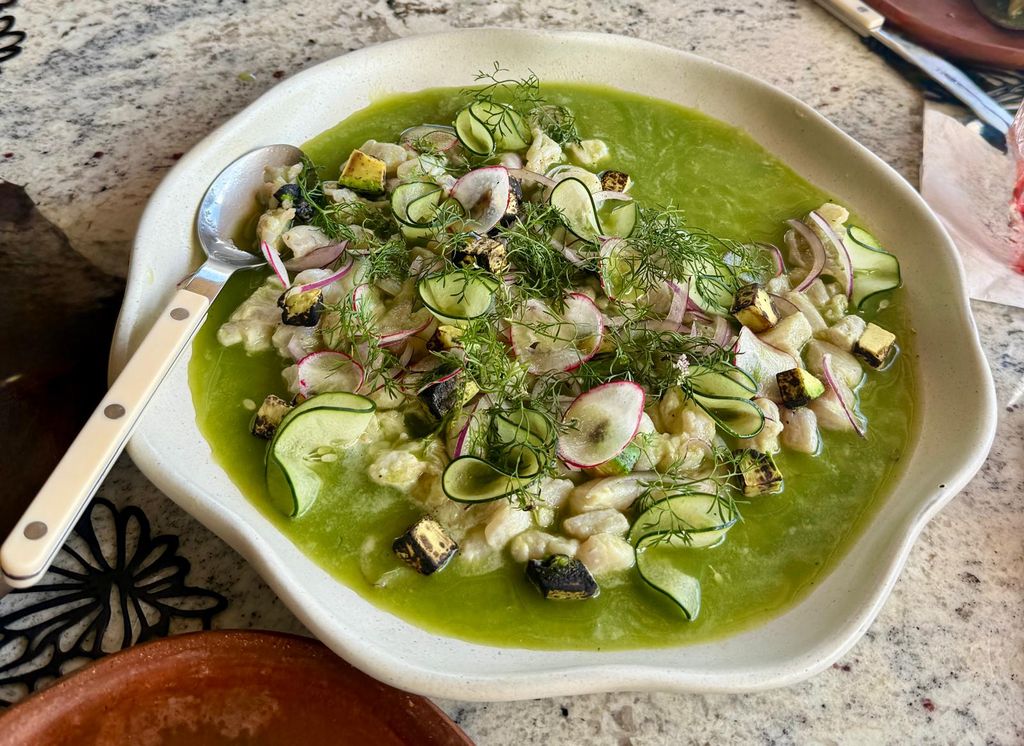
The kitchen belongs to Marcos Sáenz, born in Huehuetenango and trained at Mugaritz. At Bokéh 3.1 his cooking starts in the milpa and the hotel’s own garden, with tortillas pressed each morning. His idea is not to build a European hotel in Guatemala, but to celebrate what the country already is.
The best of it, though, is what you never asked for. A pillow menu, so you can choose how you sleep. The ritual arrives twice a day and unannounced: in the morning, a ginger juice and a ginger shot that wake you a different way; at night, relaxing infusions, cool eye pads, and the aromatherapy they carry up to the room to slow the pulse of the day. That is what I brought home with me. And the bath: rose petals and warm milk, drawn in mid-afternoon. I came back from a walk and there it was, steam still rising off it. Palo santo on the nightstand, an honesty bar that runs on trust, picnics by canoe at the water’s edge, and fresh eggs gathered from the coop for breakfast.
The days fill themselves: Antigua by 4×4, from La Merced to the artisan markets and textile studios; the neighboring villages by ATV; yoga and spa. At dusk I went into Casa del Alma for a sound-healing session among the gardens and came out with the noise of the day gone out of me. Later, beside the fire, come the Guatemalan s’mores made with champurradas, the anise crackers dunked here in coffee.
The second act is two hours away, in the highlands. Atitlán fills the caldera of an eruption 79,500 years ago: 340 meters deep, the deepest in Central America, with three volcanoes closing the horizon. Its name is Nahuatl — atl, water; titlan, between — and Aldous Huxley, comparing it to Lake Como, concluded it was, simply, too much of a good thing.
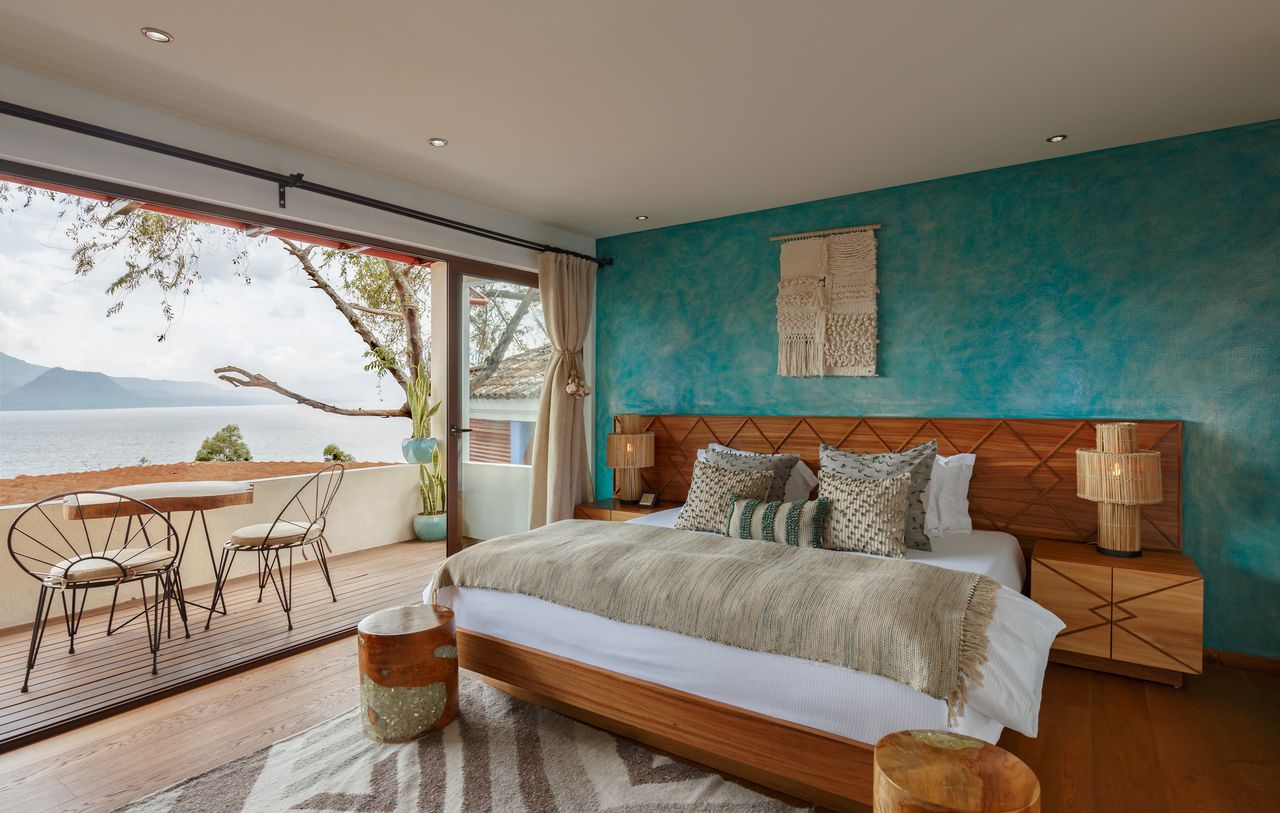
Kaqchikel and Tz’utujil communities live along its shores, having taken apostles’ names for their villages without letting go of their calendar or their cosmology. Above one of them stands Casa Palopó: a private house turned hotel of fifteen rooms and a villa, Guatemala’s first Relais & Châteaux member and, since 2025, holder of its own Michelin Key. Claudia Bosch, who runs Grupo Alta — owner of Villa Bokéh too — bought it in 2010 after sleeping there as a guest.
No room repeats here either. The newest carry the signature of Diego Olivero, the designer who translated the village’s huipiles onto the painted facades outside: fabrics from Algodones Maya, wool from Meso Goods, hand-worked woods, palettes from yellow to indigo. The freestanding tubs face the water and the infinity pool seems to spill into the lake. The ritual continues — ginger in the morning, infusions and a drawn bath at night — and the day begins with hot cacao left at the door at the hour you chose.
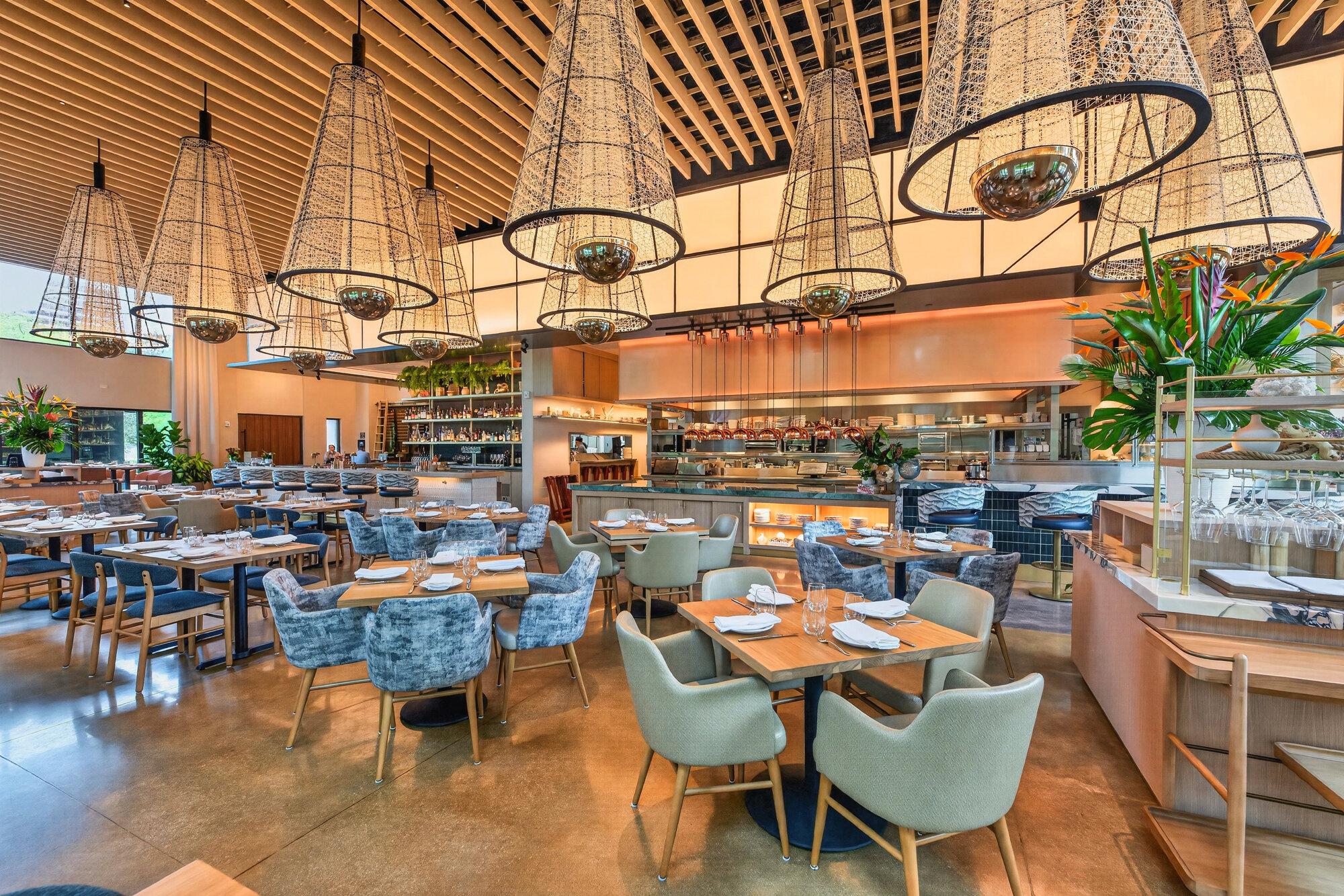
At Kinnik, Jorge Peralta — trained under Paco Roncero — cooks over open fire, grills set into the table, cuts carved in front of you; the name nods to Kinich Ahau, the Maya sun god, and the chef calls each plate a love letter to Guatemala. The farewell happens at 6.8 Palopó, built around the tortilla, with dishes gathering the spirit of the lake’s twelve villages. Between the two sits the Saq’ya’ spa.
The excursions have depth. Pintando Santa Catarina Palopó began in 2016 from an idea by journalist Harris Whitbeck and grew with Olivero through workshops with the neighbors: the designs come from the huipil — butterflies, deer, corn, the quetzal — and the colors from the landscape. So far 749 of some 850 houses are painted and tourism has risen 74 percent. Guests can take a brush and paint a family’s facade themselves.
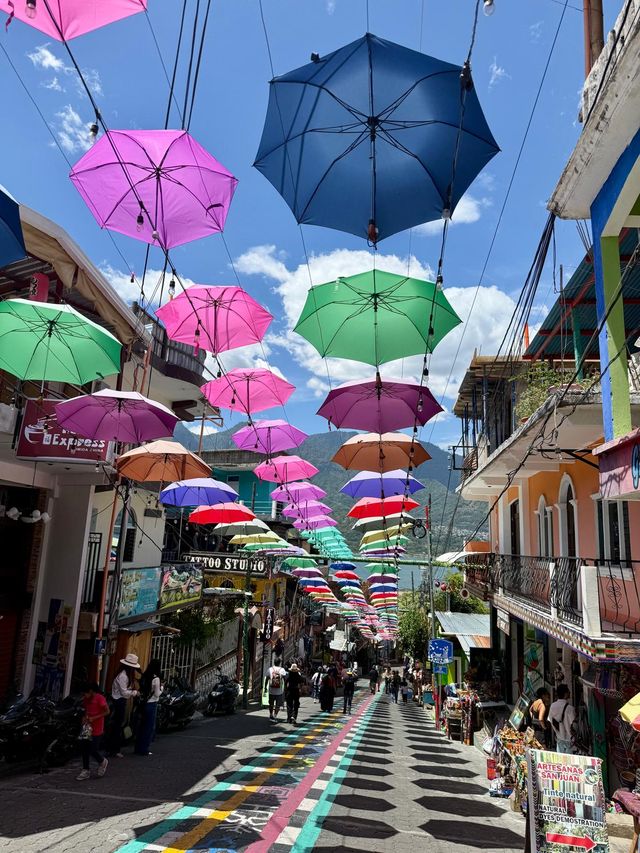
The second is by boat to San Juan La Laguna, a Tz’utujil village of steep streets and murals, where women’s cooperatives dye cotton with plants, bark, and cochineal. You taste honey and chocolate — cacao was currency before it was dessert — and come back to lunch at Kinnik, facing the water.
At dusk, on the helipad at Casa Palopó, a Maya spiritual guide leads a blessing ceremony: fire, copal, intentions spoken aloud as the sun drops behind Tolimán. I was there, and I can say it plainly: you do not have to believe in anything to understand what happens. In Guatemala the sacred is not staged for visitors; it is a four-thousand-year continuity that carries on with us or without us, and that, for a while, lets you look—an experience not to be missed.
How to do it: four nights will do, two in Antigua and two on the lake. The dry season runs November through April; Semana Santa in Antigua needs booking months ahead. Villa Bokéh, Antigua (villabokeh.com) · Casa Palopó, Lake Atitlán (casapalopo.com). Villa Bokéh is part of The Leading Hotels of the World; Casa Palopó is a Relais & Châteaux member.


 Contact Us