


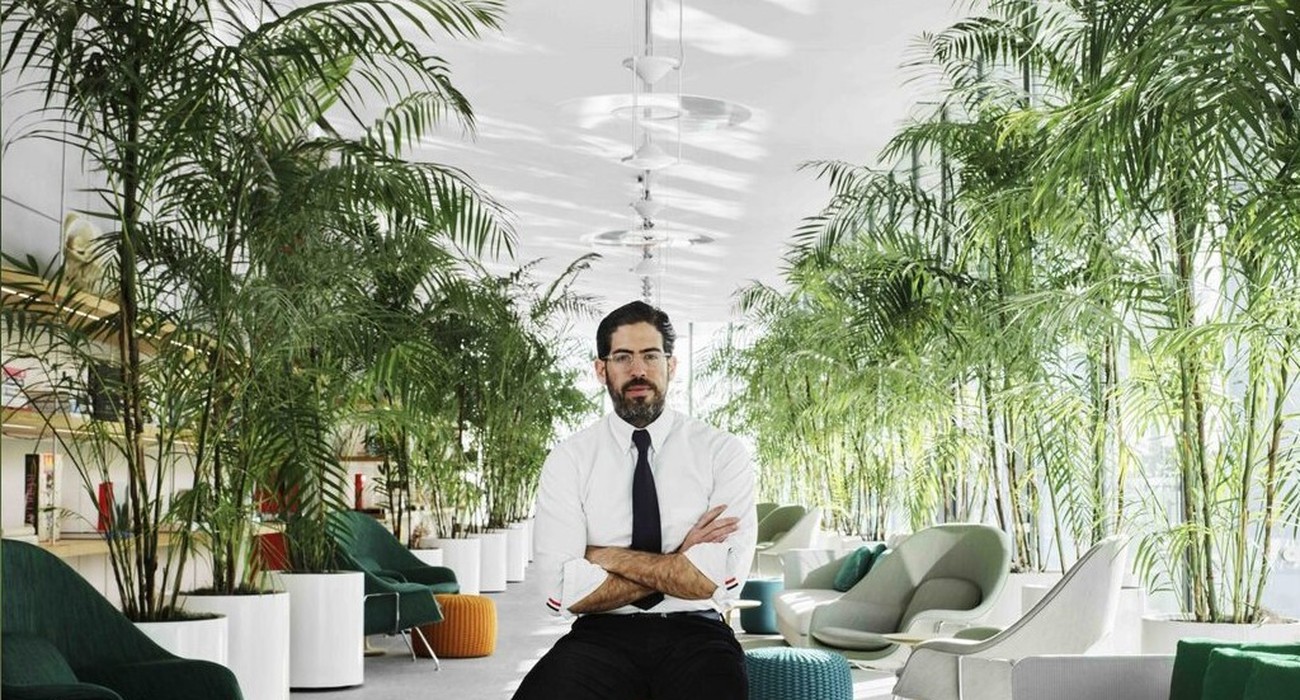

David Martin, CEO and co-founder of Terra, is one of South Florida’s most visionary real estate developers. His projects are not just about building properties, but about reshaping South Florida’s landscape for the future.
Since founding the Miami-based firm in 2001, Martin has spearheaded the development of multifamily apartments, luxury condominiums, retail spaces, hotels, and mixed-use projects in South Florida’s most sought-after locations.
Renowned for his dedication to design excellence and sustainability, Martin has collaborated with world-class architects such as Rem Koolhaas, Renzo Piano, and Bjarke Ingels. This collaborative approach creates impactful projects that enhance communities and their surroundings.
Beyond his professional achievements, Martin is deeply committed to civic and cultural initiatives. He has contributed to projects like The Underline, served on Miami-Dade County’s Biscayne Bay Task Force, and supported institutions such as the Miami Children’s Health Foundation, Vizcaya Museums and Gardens, The Freedom Tower, The Bass Museum, and the YoungArts Foundation.
Q & A with David Martin:
Could you briefly describe the magnitude of the recently approved Watson Island project and what it will mean to our community?
Miami’s Watson Island is strategically located in the city’s heart and the county. The City of Miami initiated various procurements and proposals for many years, but decades passed without significant progress. Our approach was to find a business case that could benefit the community. What was done with Jungle Island was remarkable for its time, but we felt it was time for a new vision. The recently approved Watson Island project, a 13-acre park that will be open to the public, will provide a much more accessible and inclusive space for the community while minimizing impact.
We proposed a 13-acre park that will be open to the public, providing a much more accessible and inclusive space for the community while minimizing impact. For years, residents of Venetian Causeway have voiced concerns about the noise and activities from Joia Beach Club and other events on the 18-acre site, which have negatively affected their quality of life. We collaborated with various stakeholders, including the Yacht Club, the Outdoor Club, the Venetian Causeway residents, and other neighborhood associations. We realized that it had contributed little to the community, and we saw an opportunity to make a change.
We aim to “greenify” the island and create as much open park space as possible. Our proposed development on 13 acres will have the least traffic impact compared to previous proposals. Our residential project will generate 50% less traffic while providing four times the tax revenue for the city. We proposed a low-impact, high-taxable value residential development on just five acres (30% of the site). The remaining 70% will be dedicated to environmentally focused green spaces for the community. It’s the right decision; our support–close to 60% of the votes–confirms this.
You have some significant projects on the horizon. When will you break ground on the Deauville Beach Resort site, and what are the plans?
We’re currently working with the City of Miami Beach on a few legislative changes to allow us to replicate the historic building. We’ve been collaborating closely with the historic preservation community, including the Miami Beach Preservation League and North Beach residents. Our goal is to develop something iconic and special–a reimagined village.
The plan includes a residential component as part of a broader neighborhood revitalization. We’ve partnered with incredible architects, though we have yet to announce them. We aim to create a walkable, friendlier district with shaded sidewalks, improved infrastructure, and green spaces. The project spans from 62nd Street to Town Center and 72nd Street, covering ten blocks that will be completely reimagined to reinvigorate the neighborhood.
Are there any updates on Key Biscayne’s Silver Sands Beach Resort purchase? How do you envision this project?
Yes, we received approval despite a density moratorium. We were able to add 56 large residential units to the site and obtained site plan approval a few months ago. This process involved extensive community outreach and meeting with immediate neighbors like Tidemark Key Colony and Oceana, and many residents to ensure minimal impact.
The project will feature a tropical modern design, which we’re very excited about. Pre-development is underway, and we’re preparing to launch the residential side of the project, with groundbreaking expected in 2026.
Your projects have significantly influenced Miami’s skyline. How do you envision the city evolving over the next decade?
I started the company in 2001, and our mission has always been to create environments that enhance people’s lives. Over time, my approach has evolved. While initially focused on individual buildings, I now think more about entire neighborhoods and their ecosystems, and we are very design driven.
We also funded Regatta Park, which has become a fantastic asset for the community. Our developments aim to serve not just residents but also as catalysts for positive neighborhood transformation. We embrace a Jane Jacobs-inspired approach, fostering community-driven change rather than imposing projects.
Our firm operates in over twenty municipalities, each with unique needs. We strive to understand these areas from economic, cultural, and urban planning perspectives and positively influence them. Ultimately, better neighborhoods lead to better developments.
Sustainability has become a key focus in your development. What sustainable practices or technologies are you integrating into your projects?
We approach sustainability from two angles: reducing carbon footprints and enhancing economic resiliency.
Our buildings are LEED-certified, and we were the first to achieve Gold certification for a residential building in Miami. To reduce energy consumption, we incorporate shading, water recycling, reuse water, geothermal cooling, and other nature-based solutions.
Urbanism also plays a key role. Developing in urban cores reduces car usage and travel times, which positively impacts the environment. On the resiliency side, we focus heavily on stormwater management. For example, Canopy Park in Miami Beach has 12 wells that manage stormwater for the entire South Beach Basin, improving water quality and reducing stress on pump systems. We also explore ways to incentivize sustainable behaviors among property owners and businesses.
Was being a developer always your passion? How did you get started?
No, it wasn’t initially my plan. I have a law degree and an MBA. While in college, I opened a coffee shop–without a permit, as it turned out! That experience taught me much about navigating city regulations and sparked my interest in creating things. Development is advantageous but also very challenging. Balancing this passion with family life is a constant priority for me.
What legacy do you hope to leave in Miami and the real estate industry?
My legacy will reflect my ability to develop business cases that benefit society. Too often, business and community goals are seen as separate. However, when development helps the community, people are more willing to support it. I aim to prove that capitalism can solve societal challenges while improving neighborhoods and lives.
What are some of the philanthropic or community initiatives that you’re passionate about?
Education has always been one of my greatest passions. I serve on the board of Teach for America because education is the foundation of strong communities. Teachers are the unsung heroes–our society’s true rock stars.
I am also deeply involved in other community-focused initiatives. I’m passionate about historic preservation and health-related causes, supporting efforts to combat multiple sclerosis (MS). My involvement with organizations like the Overtime Youth Center further reflects my commitment to making a difference in underserved neighborhoods, and I participate in programs like Big Brothers Big Sisters.
One initiative that stands out was a Shark Tank-style event we organized for a foster care program in Homestead. It was an inspiring experience, where foster kids pitched their business ideas to a panel of judges.
These efforts are grounded in the values I learned from my parents–compassion, generosity, and a commitment to giving back. It’s about striving to make a meaningful, positive impact while remaining kind, grounded, and connected to the community.


 Contact Us